

XINYUE
PRODUCT CENTER
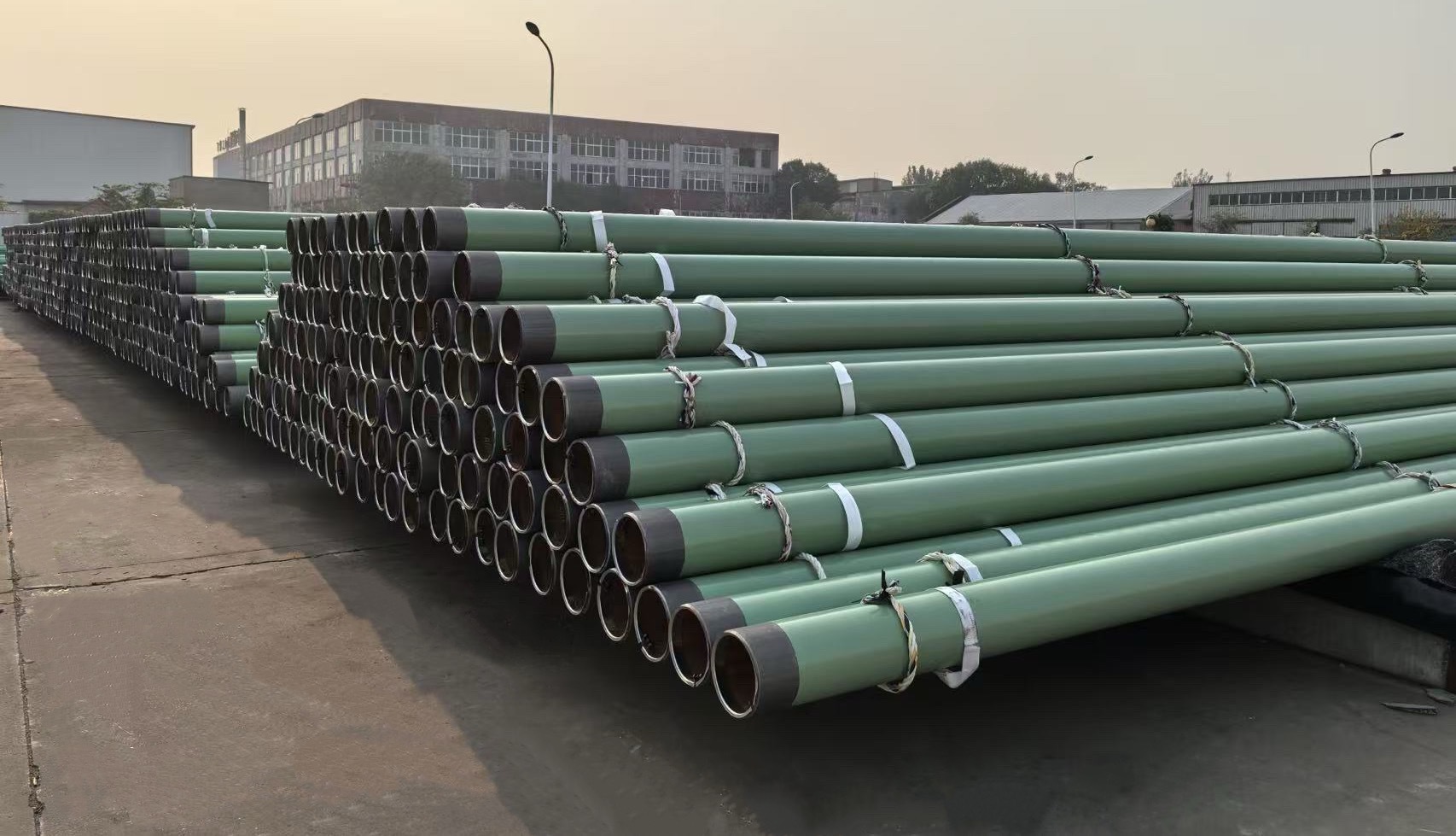
FBE Anti-Corrosive Epoxy Powder Steel Pipe
Anti-Corrosion steel pipe refers to the steel pipe that has been processed by anti-corrosion technology and can effectively prevent or slow down the corrosion phenomenon of chemical or electrochemical reaction during transportation and use.
The steel pipe can be anticorrosive inside and outside according to the needs of the project, including: 2PE/3PE coating, galvanized coating, 2PE/3PE coating, FBE epoxy powder coating, epoxy coal tar paint coating and so on.
The steel pipe can be anticorrosive inside and outside according to the needs of the project, including: 2PE/3PE coating, galvanized coating, 2PE/3PE coating, FBE epoxy powder coating, epoxy coal tar paint coating and so on.
Anti-Corrosion steel pipe refers to the steel pipe that has been processed by anti-corrosion technology and can effectively prevent or slow down the corrosion phenomenon of chemical or electrochemical reaction during transportation and use.
The steel pipe can be anticorrosive inside and outside according to the needs of the project, including: 2PE/3PE coating, galvanized coating, 2PE/3PE coating, FBE epoxy powder coating, epoxy coal tar paint coating and so on.
The steel pipe can be anticorrosive inside and outside according to the needs of the project, including: 2PE/3PE coating, galvanized coating, 2PE/3PE coating, FBE epoxy powder coating, epoxy coal tar paint coating and so on.
Polyurethane Insulation Steel Pipe
Anti-Corrosion steel pipe refers to the steel pipe that has been processed by anti-corrosion technology and can effectively prevent or slow down the corrosion phenomenon of chemical or electrochemical reaction during transportation and use.
The steel pipe can be anticorrosive inside and outside according to the needs of the project, including: 2PE/3PE coating, galvanized coating, 2PE/3PE coating, FBE epoxy powder coating, epoxy coal tar paint coating and so on.
The steel pipe can be anticorrosive inside and outside according to the needs of the project, including: 2PE/3PE coating, galvanized coating, 2PE/3PE coating, FBE epoxy powder coating, epoxy coal tar paint coating and so on.
Different types of engineering construction choose different uses of scaffolding.
Most of the bridge support frames use bowl buckle scaffolding, and there are also portal scaffolding.
The main structure construction of the ground scaffold using fastener scaffold is mostly, the longitudinal distance of scaffolding pole is generally 1.2~1.8m;
The transverse distance is generally 0.9~1.5m.
In the construction process, the use of scaffolding is very flexible, according to the specific construction requirements, the composition of different frame size, shape and carrying capacity of single and double rows of scaffolding, support frame, support column, material lifting frame, climbing scaffold, suspension frame and other functional construction equipment. It can also be used to build facilities, sheds, lighthouses and other structures.
Especially suitable for the erection of curved scaffolding and heavy support frame.
Most of the bridge support frames use bowl buckle scaffolding, and there are also portal scaffolding.
The main structure construction of the ground scaffold using fastener scaffold is mostly, the longitudinal distance of scaffolding pole is generally 1.2~1.8m;
The transverse distance is generally 0.9~1.5m.
In the construction process, the use of scaffolding is very flexible, according to the specific construction requirements, the composition of different frame size, shape and carrying capacity of single and double rows of scaffolding, support frame, support column, material lifting frame, climbing scaffold, suspension frame and other functional construction equipment. It can also be used to build facilities, sheds, lighthouses and other structures.
Especially suitable for the erection of curved scaffolding and heavy support frame.
Different types of engineering construction choose different uses of scaffolding.
Most of the bridge support frames use bowl buckle scaffolding, and there are also portal scaffolding.
The main structure construction of the ground scaffold using fastener scaffold is mostly, the longitudinal distance of scaffolding pole is generally 1.2~1.8m;
The transverse distance is generally 0.9~1.5m.
In the construction process, the use of scaffolding is very flexible, according to the specific construction requirements, the composition of different frame size, shape and carrying capacity of single and double rows of scaffolding, support frame, support column, material lifting frame, climbing scaffold, suspension frame and other functional construction equipment. It can also be used to build facilities, sheds, lighthouses and other structures.
Especially suitable for the erection of curved scaffolding and heavy support frame.
Most of the bridge support frames use bowl buckle scaffolding, and there are also portal scaffolding.
The main structure construction of the ground scaffold using fastener scaffold is mostly, the longitudinal distance of scaffolding pole is generally 1.2~1.8m;
The transverse distance is generally 0.9~1.5m.
In the construction process, the use of scaffolding is very flexible, according to the specific construction requirements, the composition of different frame size, shape and carrying capacity of single and double rows of scaffolding, support frame, support column, material lifting frame, climbing scaffold, suspension frame and other functional construction equipment. It can also be used to build facilities, sheds, lighthouses and other structures.
Especially suitable for the erection of curved scaffolding and heavy support frame.
Coal Mine Construction Structure
During the construction process of coal mines, a large amount of steel pipes and supporting steel structures are required to build the main shaft (vertical shaft), excavate the main roadway, divide the mining area, and establish the working face. The steel structure of coal mines is usually used for mine support, which has high requirements for the performance of steel and the quality of welding.
In the past few years, Xinyue has provided drawing splitting, material supply, welding finished products, pre installation, and on-site guidance for multiple coal mine projects both domestically and internationally, accumulating rich experience in the supply of coal mine steel structures.
The basic components of a bridge include the upper structure, lower structure, support system, and ancillary facilities. The substructure refers to the part of a bridge located below the support, also known as the supporting structure, which includes piers, abutments, and the foundation of piers. The adjacent two span bridge is located in the middle of the bridge, and the basic concept of the box girder structure is that all upper structures become integral hollow beams. When the main load passes through any position on the bridge, all parts of the hollow beam (ribs, top plate, and bottom plate) participate in the force as a whole. The lower structure is usually made of steel plates, steel pipes, angle steels, H-beams, and other parts, which are welded together through components and ultimately connected on-site by welding or bolts.
Xinyue can provide customers with design analysis, drawing splitting, steel production, welding and forming work, etc.
Pressure Bearing Construction Structure
The main load-bearing components of a building are divided into horizontal and vertical walls, which mainly bear horizontal and vertical loads. Column - a component that mainly bears vertical loads, used to support floor or roof loads, mainly divided into frame columns, component columns, etc. Beam - a horizontal load-bearing component used to support the load on floor or roof panels, mainly divided into square or cross shaped steel structures. The load-bearing structure places great emphasis on the quality of welding in production, and generally requires full fusion welding with very precise requirements for straightness and torsion. When it comes to complex welding component testing, in addition to conventional MT and UT testing, special testing molds need to be made to ensure that the dimensions of each small component are consistent with the drawing requirements.
Prefabricated Components Structure
Steel prefabricated components refer to assembly parts that are produced and processed to a certain extent in the factory, with an independent structural system, and can be directly transported to the construction site for installation. Common steel structure prefabricated components include steel beams, steel columns, steel bridge beams, steel structure floor slabs, etc.
According to their application and form, they can be divided into frame prefabricated parts, plate prefabricated parts, steel pipe prefabricated parts, etc. The advantages of this structure include high strength, light weight, good overall stiffness, and strong resistance to deformation. It is particularly suitable for constructing large-span, ultra-high, and ultra-heavy buildings. After prefabrication in the factory, it can greatly save installation and welding work on the project site. Steel prefabricated components can be used for various types of mountain bridges, railway bridges, highway bridges, urban light rail bridges, substations, substations, ship structures, elevators, offshore platform structures, etc
Vinyl PVC Sheet Pile,Heavy Duty Steel Sheet Pile for Foundation Work manufacturersChina
The Vinyl sheet pile (PVC Sheet Pile) is a new type of high strength composite material,which is extruded by a specia lprocess.
The shape of the sheetpile designed according to the principle of physics, adopts large moment of inertia section design, and is combined with multi-direction concave and convex joints to become a new type of continuous, high strength and high lateral bending resistance green bank protection and flood control structure.Ecological sheet pile can effectively replace traditional materials, such as steel sheet pile, concrete sheet pile or wood sheet pile.It is widely used because of its excellent performance parameters and low investment cost.
Multi-span film greenhouses have higher land utilization rate than other greenhouses and are cost-effective. They are multi-span greenhouses covered with film. A complete multi-span film greenhouse mainly consists of hot-dip galvanized steel main frame, greenhouse civil foundation, covering materials, hot-dip galvanized steel outer sunshade frame, internal thermal insulation system, outer sunshade system, cooling system with wet curtain and fan, rolling film window system at top and surrounding, power distribution system, spraying system and drainage system.
Solar greenhouse, short for energy-saving solar greenhouse, also known as warm shed, is composed of gable walls on both sides, enclosure walls, supporting frames and covering materials. It is a unique greenhouse type in northern China without indoor heating. The rear wall absorbs solar energy to store and release heat to maintain a certain indoor temperature for the growth of vegetable crops.
Greenhouse breeding, also called warm shed breeding, is an advanced, mature and applicable technology. It can achieve the same breeding effect as fully enclosed livestock houses with low investment. It can reduce livestock and poultry mortality by 2.7%-13.5%, increase meat and egg yield by 12%-25%, and save more than 11% of feed. It promotes the popularization of improved varieties and new technologies, drives moderate-scale breeding, realizes balanced supply of livestock and poultry products, and serves as an important technology for developing high-yield and high-quality animal husbandry.
Oval tubes have become popular greenhouse frame materials in recent years due to excellent compression resistance. Early oval tubes were processed from round tubes, which limited their application due to fixed round tube specifications. Nowadays, they are directly made of galvanized strip steel with adjustable length to reduce promotion restrictions. Greenhouses with oval steel frames have a span of 10-20 meters, length of 50-120 meters, ridge height of 5.0-6 meters and side height of about 1.5-1.7 meters. The greenhouse is covered with 0.15mm anti-dripping film fixed by film pressing lines. Electric film rollers are installed at roof and bottom vents for ventilation and cooling in summer. The whole greenhouse is covered with rainproof thermal insulation quilts outside, and electric rolling machines are equipped on both sides.
Multi-span Polycarbonate Sheet Greenhouse
It has many advantages such as good light transmission, thermal insulation, light weight, high strength, anti-condensation, impact resistance, flame retardancy, economy and durability. Multi-span polycarbonate sheet greenhouses feature large span, spacious and bright interior, good ventilation and high ornamental value. They provide larger space for indoor equipment and personnel movement and better adaptability for internal layout adjustment. Polycarbonate sheets have good elasticity and can be bent into arcs. Their impact resistance is 250-300 times that of ordinary glass. They will not brittle at -40°C or soften at 125°C, with stable mechanical properties under harsh environments. Greenhouses covered with polycarbonate sheets have attractive appearance and excellent thermal insulation, saving heating energy in winter. Compared with single-layer glass greenhouses, they can save 50% energy and greatly cut winter operating costs.
Covering material: Polycarbonate sheet
Features:
1. Light weight
2. High impact resistance
3. Light transmittance over 75%
4. Strong weather and ultraviolet resistance
5. Excellent thermal insulation
6. Remarkable anti-condensation performance
Structural Specifications:
Span: 8m, 9.6m, 10.8m, 12m
Bay width: 4m, 8m
Wind load: 0.5kn/m
Snow load: 0.4kn/m